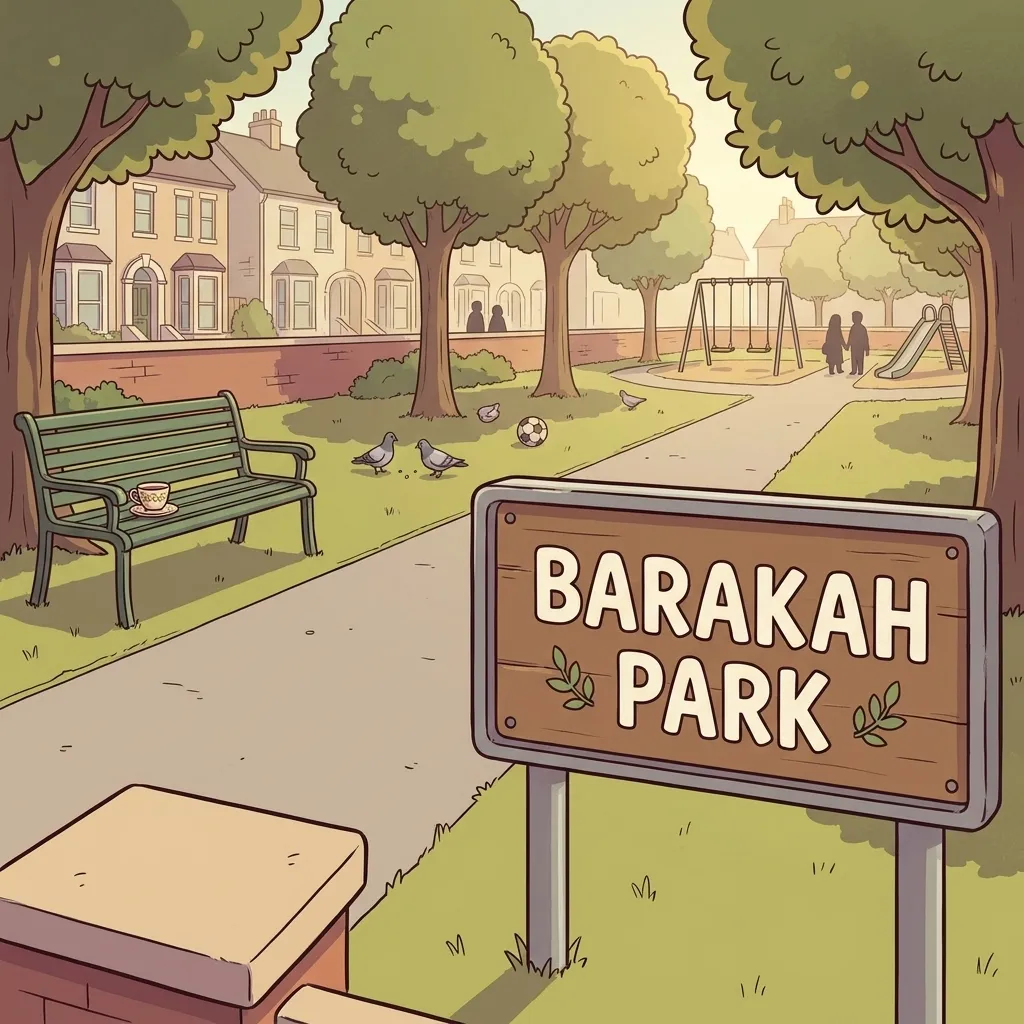
A patch of grass, a tired swing and a cricket match that has technically been running since 2009. Jumpers for wickets, and watch the geese on a Sunday.
Every neighbourhood has a park that is doing its best. For Barakah Close, that park is Barakah Park: a small green space with uneven grass, a few benches, a tired swing, a path everyone uses as a shortcut, and a cricket match that may or may not have started before Rayyan was born.
Barakah Park is where families walk after dinner, kids run around until someone cries, uncles discuss everything except the actual topic, and someone always says, "last over," even though the match clearly has another forty minutes left. It is calm. Mostly. Until the geese get involved.
Nobody knows exactly when the Barakah Park cricket match started. Some say 2009. Some say before that. Some say it began as a quick game after Asr and then quietly became part of local history. Whatever the truth, the match is still going.
There are no official teams. The rules change depending on who is batting. The wickets are usually jumpers, bags, or one unlucky bottle. The boundary is whatever people agree it is until the ball goes somewhere inconvenient. If the ball hits the bench, it is four. If it goes into the bushes, everyone argues. If it goes near the geese, the game pauses for health and safety.
Barakah Park does not need proper equipment. It has imagination, arguments and enough jumpers to create a full sporting venue. The wickets might be a hoodie and a school bag. The crease might be a line in the mud. The scoreboard might be one person with a questionable memory. The umpire might also be batting next, which creates obvious problems.
Rayyan understands the chaos immediately. The rules are not fixed, they are negotiated in real time by whoever is loudest. Ayaan pretends to be casual, but if he gets out cheaply, suddenly it becomes "just a quick game anyway." Imran watches like a man who believes every young person's technique needs correction. Aaliyah walks past and somehow ends the whole debate with one sentence. This is Barakah Park cricket: half sport, half community meeting.
Every park has one piece of equipment that looks like it has seen things. At Barakah Park, it is the swing. It still works, technically. It just complains. One side is slightly higher than the other. The chain makes a noise that sounds like it is remembering better days. Parents look at it with suspicion. Kids still use it with full confidence.
The swing is where children queue, argue, negotiate turns, and insist they were "literally next" even when they were nowhere near the line. It is also where someone always swings too high while an adult shouts, "Careful!" in a voice that suggests they have already imagined the hospital trip. The swing is tired. The swing is loyal. The swing is part of the neighbourhood.
The benches at Barakah Park are where quick chats become long updates. Someone sits down for five minutes and leaves knowing three family developments, two wedding updates, one parking complaint and a rumour about a shop on Chai Street.
For Imran, the bench is a place to observe the world and explain what everyone is doing wrong. For Sadia, it is where she can have a normal conversation while somehow still tracking what everyone in the family is doing. For Ayaan, it is where he tries to look relaxed and grown. For Aaliyah, it is where she hears one sentence and immediately knows there is a deeper issue. For Rayyan, it is a place with WiFi if he stands in exactly the right spot. The benches look ordinary, but they hold half the neighbourhood's information.
Then there are the geese. Nobody invited them. Nobody fully trusts them. Everyone respects their authority. The geese at Barakah Park behave like they own the grass, the path, the pond area and possibly parts of the council. They walk slowly, stare aggressively, and make normal people cross the path just to avoid eye contact.
On Sundays, they are worse. No one knows why. Maybe they are busier. Maybe they are protecting territory. Maybe they simply understand weekend foot traffic. Either way, the rule is simple: mind the geese.
A walk in Barakah Park is rarely just a walk. Someone says they need fresh air. Someone else joins. Then someone is seen by someone. Then the conversation begins. A short walk becomes an update about the family. A quiet stroll becomes a discussion about someone's cousin. A peaceful lap around the park becomes an accidental community appearance.
This is why the Ali family cannot simply "go for a walk" without consequences. If Sadia goes, she will meet someone she knows. If Imran goes, he will end up explaining something. If Ayaan goes, he will somehow be asked what he is doing with his life. If Aaliyah goes, she will notice one contradiction and bring it home. If Rayyan goes, he will complain until snacks are involved. Barakah Park is outdoors, but it is not private. Nothing on Barakah Close ever is.
For the Ali family, Barakah Park is also a place to escape the house without leaving the world of the show. Sometimes the house is too loud. Sometimes the front room is too full. Sometimes someone needs air, space, a walk, or ten minutes away from being asked to do something.
Ayaan can have a serious conversation while pretending he was just stretching. Aaliyah can challenge family logic without being interrupted by the kettle. Rayyan can avoid chores in a location that looks healthier than his bedroom. Imran can stand with his hands behind his back and judge the state of society from a bench. Sadia can enjoy five minutes of peace, which will last around thirty seconds before someone says her name. Barakah Park is quieter than the house. But only slightly.
What makes Barakah Park important is not the grass, the swing or even the geese. It is the people. The park is where the neighbourhood overlaps: families from Barakah Close, people from Chai Street, familiar faces from Masjid-e-Barakah, kids from school, cousins passing through, aunties walking in pairs, uncles discussing parking, and someone always holding a carrier bag for no clear reason.
It is the kind of place where everyone is doing their own thing, but everyone still notices everyone else. That makes it perfect for House No. 786. A family sitcom needs places where characters can bump into trouble without the plot feeling forced. Barakah Park is exactly that: a casual setting where one cricket ball, one awkward greeting, one goose, one bench conversation or one "quick walk" can become the whole story.
Barakah Park expands the world beyond the front door.
It shows that the Ali family do not live in isolation. They live in a neighbourhood with routines, familiar faces, shared spaces, and small community dramas that everyone understands. The park is not glamorous, but it is real. It is where ordinary life happens.
Where kids play. Where adults talk. Where teenagers complain. Where uncles become cricket selectors. Where people pretend they are only staying ten minutes. Where geese patrol like security. And where the smallest moment can still become a full Barakah Close event.
Because in House No. 786, even a patch of grass has politics. Especially if someone moves the jumpers.